Control of the process
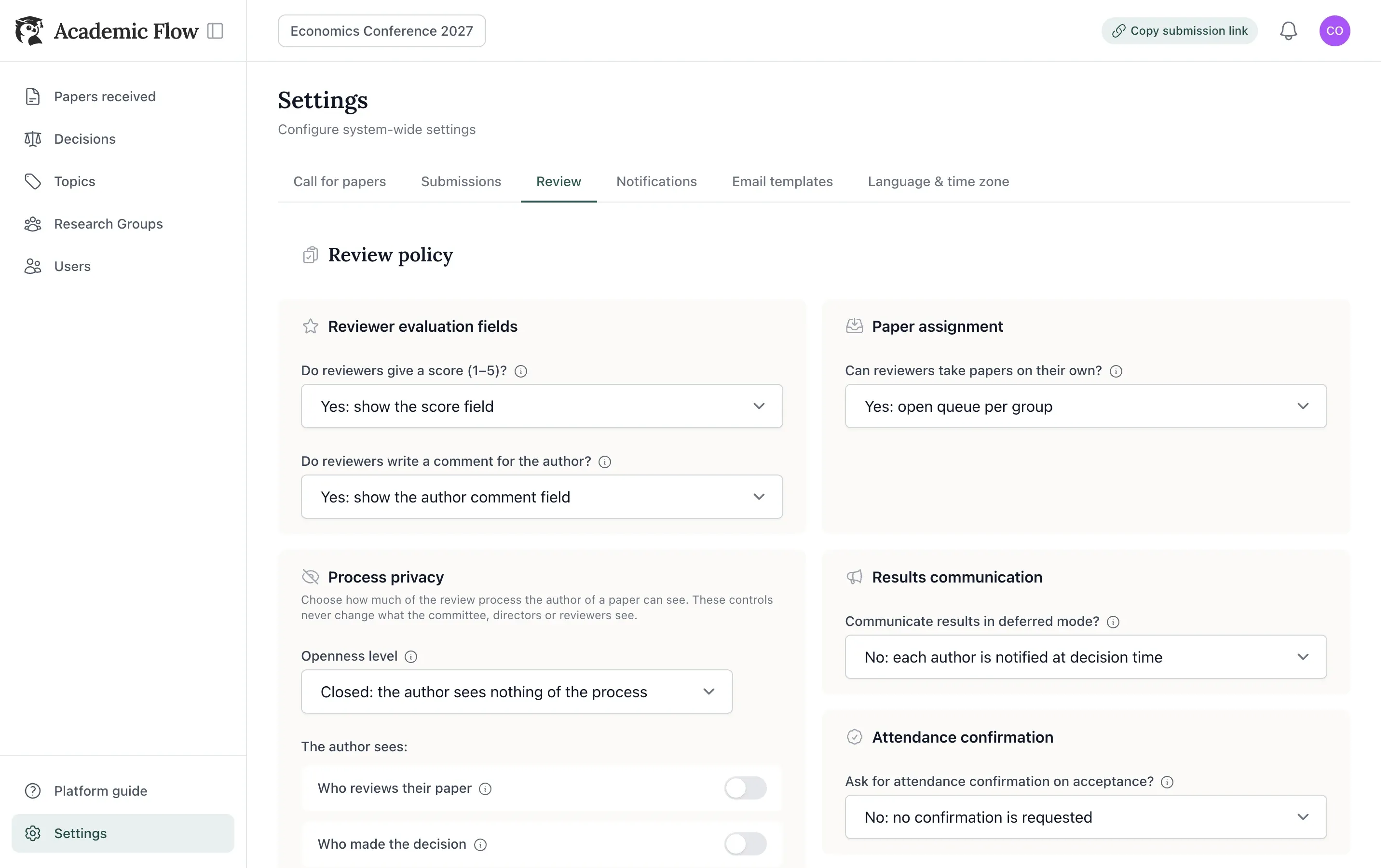
The committee sees at a glance what needs attention, without having to track the real status by email.
Decision queue filtered by status

Academic Flow runs your academic event's entire editorial cycle: call for papers, submissions, review by research groups, and final decisions. Every user sees just what belongs to them, in English or Spanish.
They already trust us with their call for papers




The committee and Fatum see in one place where each paper stands, what is still to be decided, and who has confirmed attendance.
See the full story →This is what Academic Flow looks like at every stage of the process.
Your processes stop depending on one person's memory.
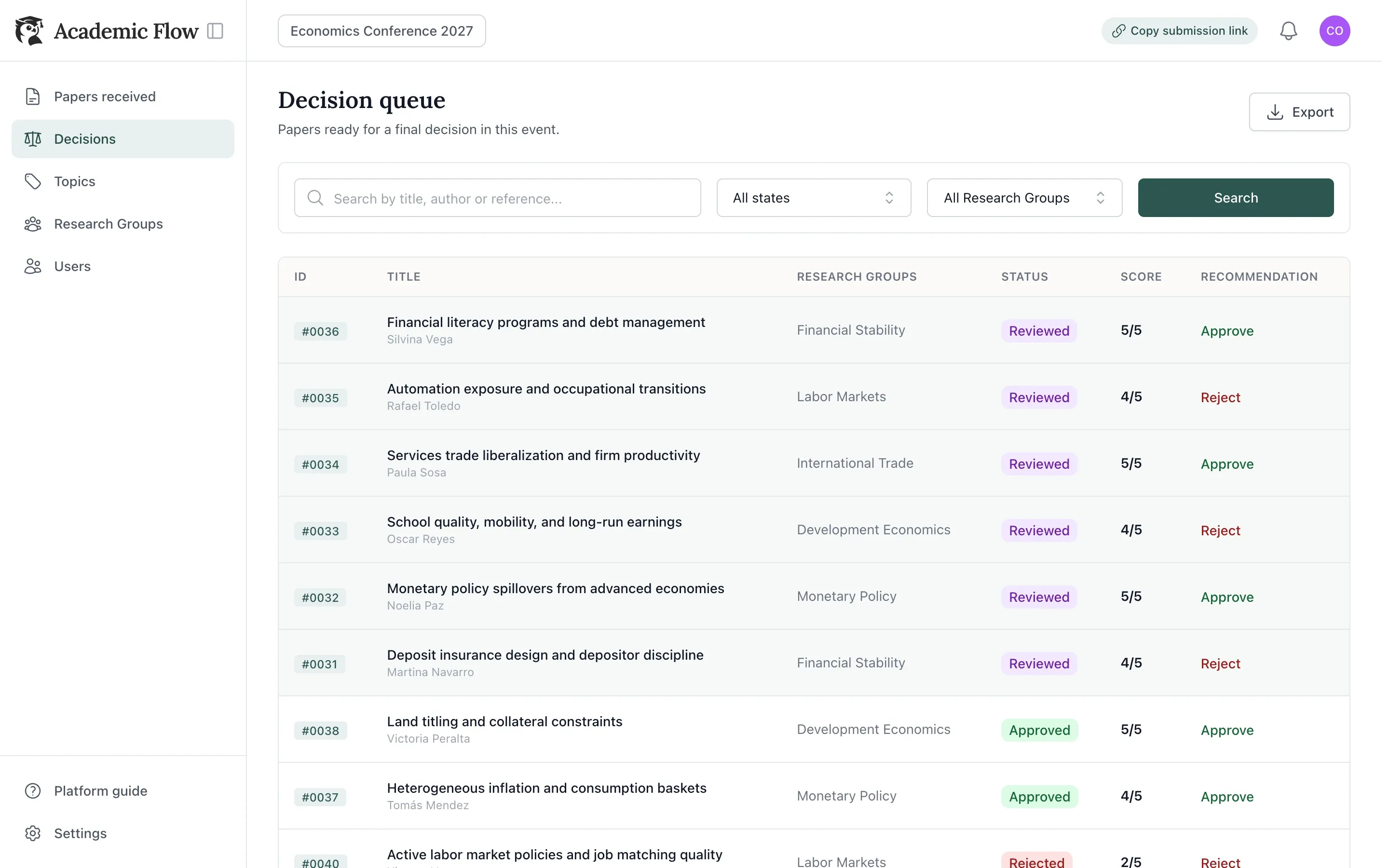
The committee sees at a glance what needs attention, without having to track the real status by email.
Decision queue filtered by status
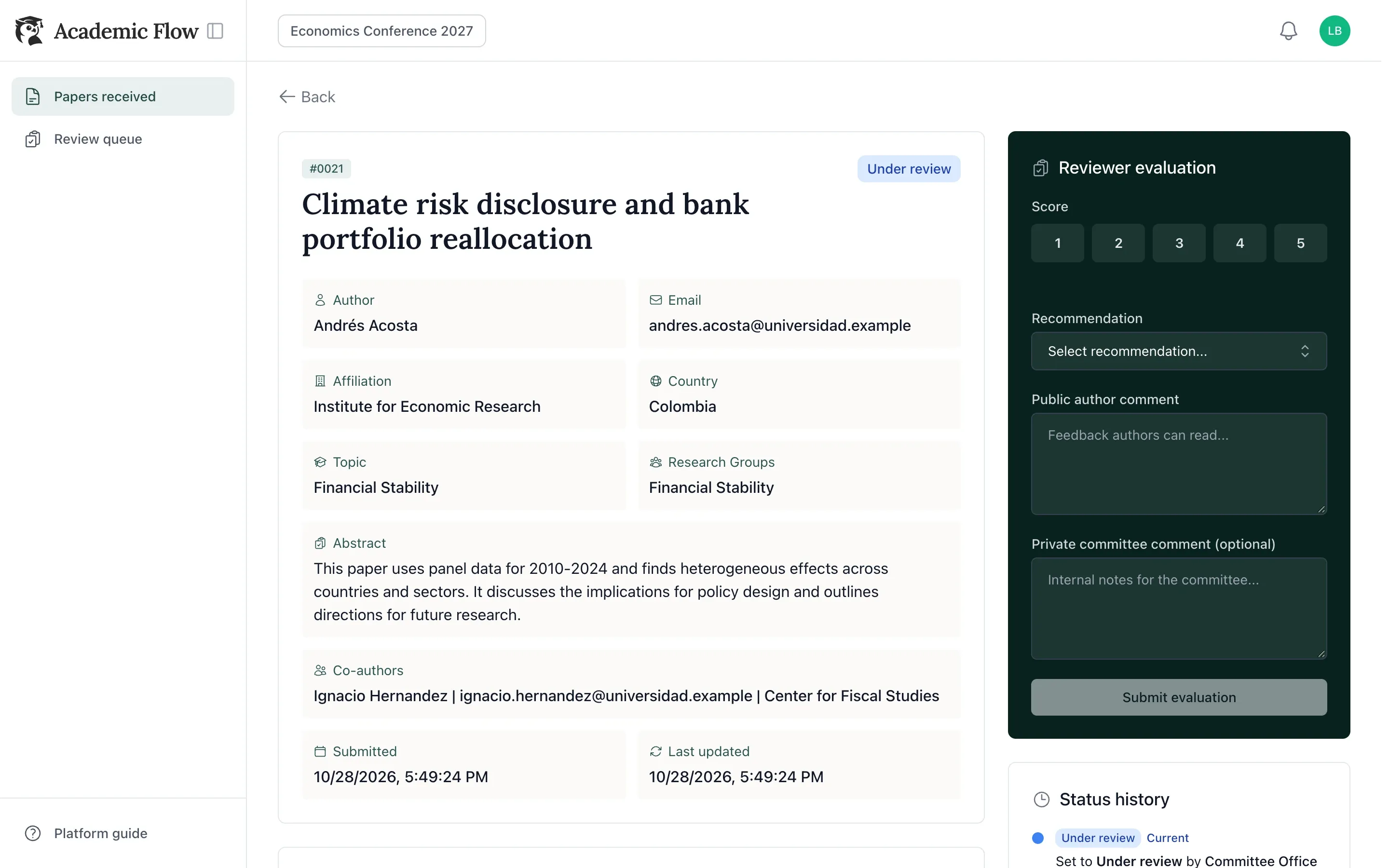
Every reviewer finds their papers, their deadlines, and their evaluation form in a single inbox.
Reviewer inbox with structured evaluation
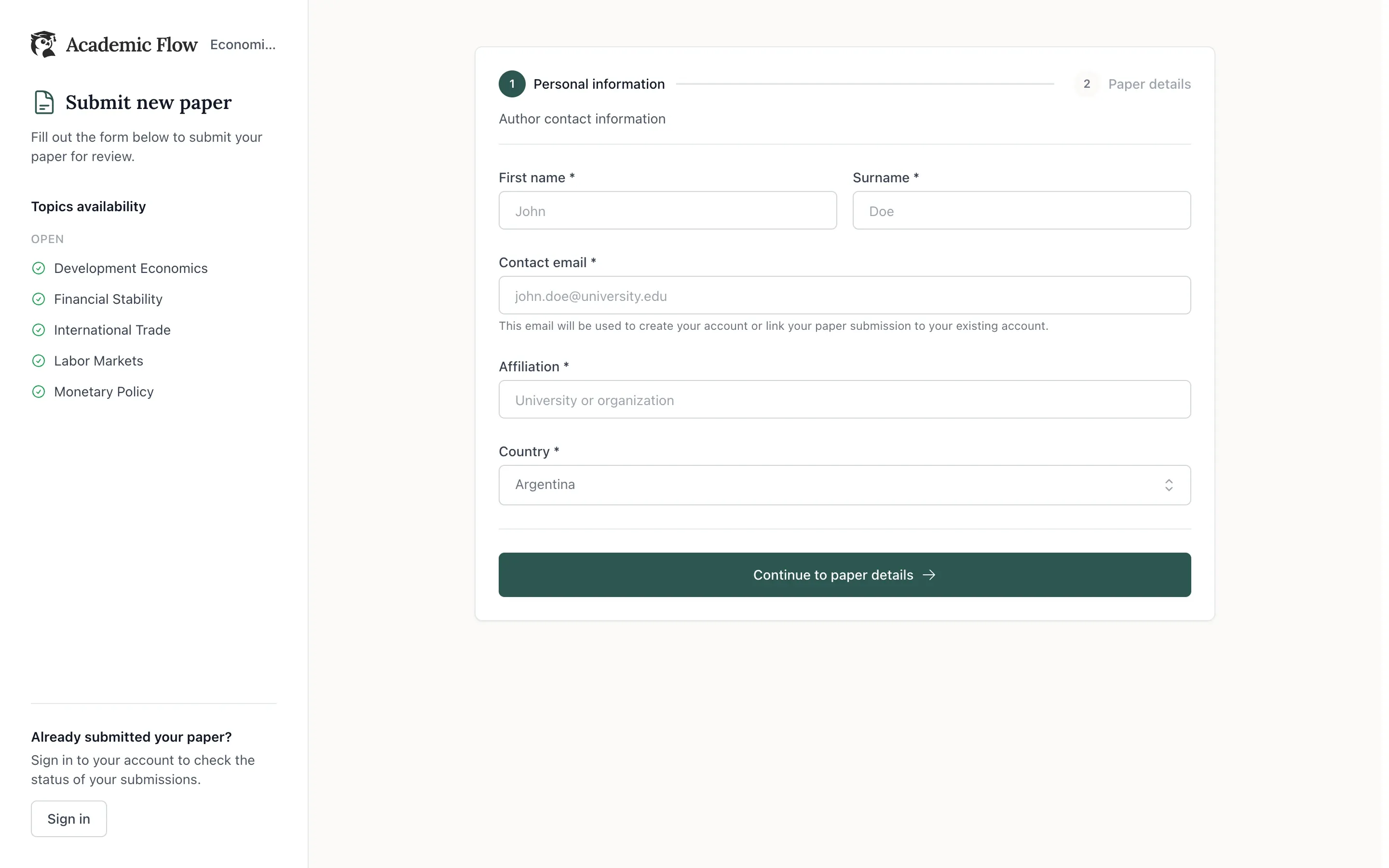
Your event, with its own terminology: name groups, workshops, papers, and committees however you like.
Language and terminology settings per event
Once review is done, Academic Flow also takes care of the conference program and how attendees follow it.

Organize the schedule by day and by room, with sessions, speakers, and venues, on the same platform where you manage the papers.

A website with the full schedule, the speakers, and the practical information about your conference, ready to share with attendees.

An app with your event’s name and identity, where each attendee builds their own schedule and checks speakers, rooms, maps, sponsors, and hotels.
With Academic Flow we see the Forum's whole call at a glance: which papers came in, where each review stands, and who has already confirmed. We no longer track the event's status through emails.
The most common questions from a committee weighing a switch of tools.
The cost today is hidden in committee hours and in scattered follow-up across inboxes. Academic Flow brings statuses, queues, and automatic notifications together in one place, so the committee runs the process from there instead of rebuilding it by hand every week.
Yes, and our team will help you easily bring the entire process into the platform, providing ongoing support to you, your team members, and your event participants.
Reviewers see their own inbox with their assigned submissions and deadlines. They have access to assistance with questions about using the platform, as well as video tutorials that explain how it works in detail.
The entire platform and its emails exist in English and Spanish, and each person picks their own language; the event can also set a default language.
Yes. Beyond the call for papers and review, we manage the conference program and publish it on a website and in an iOS and Android app with your event’s identity. You can use it alongside the call for papers or for the program only.
We offer plans tailored to the needs of each event. We share them with you during the initial demo, with no obligation.
The demo is free and takes no more than 30 minutes.
How your call for papers works today: size, research groups, dates, and what's costing you the most.
With your terminology and your groups, not a generic tour.
If the demo confirms it fits your operation, we discuss how to move forward and coordinate the work with your team.